Looking for the best free and paid Jimpix alternatives in 2026? We've compared the top other tools by features, pricing, and creator reviews to help you find the right fit.
Last updated September 2026 · Reviewed by Janis M.
Jimpix combines category word lists into random usernames. It is free, fast, and deliberately dumb, which is why it produces so many options.
Want a handle for a social profile or gamer tag: Spinxo takes your interests as input, so results feel less random.
Want a brand name for a business, channel or product: Namelix produces short, brandable names rather than word mashups.
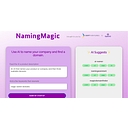
Want a name with a matching domain: NamingMagic checks naming and domain availability together.
None of them tell you whether the handle is free on the platforms you care about. That check is manual, and it is the step that decides everything.
Why Jimpix is not usually the problem
Jimpix does one thing: it mixes words from categories you pick and gives you a long list of combinations. It is free, needs no account, and produces volume fast. For getting unstuck on a blank field, that is genuinely useful, and the sheer quantity is the point.
The frustration people bring here is not that the list is too short. It is that the names are random, so they carry no meaning and no connection to what you actually do. A handle assembled from two unrelated words is memorable to nobody, and after a hundred of them you are no closer to a decision than when you started. Randomness is quantity without direction.
The second frustration is availability. You find something you like, then discover it is taken on Instagram, taken on TikTok, and the domain sold years ago. No generator on this page checks that for you, which means the real work happens after the tool, and choosing a different generator will not change it.
Namelix is the upgrade when the thing you are naming will appear on an invoice. Instead of mashing words together it produces compact, brandable names in the style startups actually use, and you can steer it toward shorter, more abstract or more literal output. If you are naming a channel, a newsletter or a product rather than picking a gaming handle, this is where to start. The output still needs domain checks, trademark research and someone saying it out loud before you commit. Read our full Namelix review →
2. NamingMagic, best when the domain matters
NamingMagic pairs name generation with domain discovery, which addresses the most common way naming stalls: settling on something and finding the domain gone. Seeing both at once saves a lot of doubling back. Be careful of the trap it creates, though. An available domain is not evidence of a good name, and it is easy to talk yourself into a weak option because the .com happened to be free. Read our full NamingMagic review →
3. Spinxo, best for handles with some meaning
Spinxo sits closest to Jimpix and fixes its main weakness. You feed it your name, interests, hobbies and style preferences, and it builds usernames around those inputs rather than pulling from generic category lists. The results feel like they belong to a person. It covers social handles, gamer tags and general account names. Like everything here, availability checking is still yours to do. Read our full Spinxo review →
The step every generator skips
Whichever tool you use, the process that actually works looks the same. Generate far more candidates than you need and shortlist five, because judging one name in isolation is nearly impossible. Say each one out loud, then spell it out loud, since a handle that needs explaining in a podcast intro or a live stream is already costing you.
Then check availability everywhere at once, not one platform at a time. Look on every platform you might use in three years rather than the one you are launching on today, and check the domain even if you have no plans for a site. A name that is free in four places and taken in the fifth is usually not worth the compromise, because you will end up with mismatched handles that make you harder to find.
Finally, search the shortlisted name on its own to see what already ranks for it. A handle that collides with an established brand, a common phrase or something unfortunate will quietly cost you traffic for as long as you use it, and that is the kind of problem no generator will warn you about.
Match the tool to what you are naming. A gaming or social handle is Spinxo territory, where personal inputs beat random combinations. A business, channel or product name is Namelix, which produces names that will still look right on a landing page in two years. Anything that needs a website is NamingMagic, so you are not choosing a name and hunting a domain separately.
Jimpix keeps a real use, and it is worth being fair about it. When you have absolutely no direction and need a hundred options to react against, random combinations break the deadlock faster than a tool asking you to describe your brand. Use it to find a direction, then switch to a tool with intent behind it.
Whatever you generate, budget more time for checking than for generating. The tools are free and take minutes; the availability work is the part that decides whether you can keep the name. Our full Jimpix review covers the tool in detail, and the creator tools directory has the wider field.
Frequently Asked Questions
What is the best alternative to Jimpix?
Spinxo if you want usernames, because it builds them from your own interests and inputs rather than random word lists, so the results feel connected to you. Namelix if you are naming a business, channel or product and need something short and brandable. NamingMagic if you need a matching domain as part of the decision.
Is Jimpix free?
Yes. Jimpix is free to use with no account required, which is standard across this category. Spinxo, Namelix and NamingMagic are all free to generate and browse names as well. Costs in naming come later, from buying a domain or a premium name from a marketplace, not from the generators themselves.
How do I check if a username is available on every platform?
No generator on this page does it, so it is a manual step. Check each platform you might use within the next few years rather than only the one you are launching on, and check the domain even if you do not plan a website yet. Consistent handles across platforms make you findable; mismatched ones quietly cost you followers who look for you in the wrong place.
What is the difference between a username generator and a business name generator?
The output is built for different purposes. Username generators like Jimpix and Spinxo produce handles: short, informal, often playful, meant for a profile. Business name generators like Namelix produce brandable names meant to work on a logo, an invoice and a domain. Using a handle generator to name a company usually produces something that reads as a gamer tag on a homepage.
Can I just use ChatGPT or Claude to generate usernames?
Yes, and for brand names a general AI assistant often beats a dedicated generator, because you can describe your audience, tone and positioning in a sentence and iterate against real feedback. Where dedicated tools still win is volume and speed for handles, and in NamingMagic's case the domain check running alongside. The availability problem is identical either way.
What makes a good creator username?
It should survive being said out loud and spelled out loud, since you will do both constantly on video, in podcasts and on live streams. Avoid numbers substituting for letters, deliberate misspellings and anything that needs a hyphen, because all three break word-of-mouth. Above all it should be available in the same form everywhere, which is worth more than any individual name being marginally cleverer.
Should I pick a name that includes my niche?
It helps discovery early and constrains you later. A niche-specific handle tells a new visitor what you do before they read anything, which is genuinely valuable at the start. The cost appears if you shift focus, since the name then actively misdescribes you and renaming means losing accumulated search presence and follower recognition. Using your own name avoids that problem entirely, at the price of saying less upfront.
Do these tools check trademarks?
No, and none of them claim to. A generated name can be available on every platform and still conflict with a registered trademark, which becomes a real problem once you are earning money under it. For anything commercial, run a trademark search in the countries you operate in before committing, and treat generator output as brainstorming material rather than a cleared shortlist.