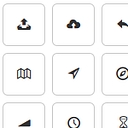
What is Fontello and how does it work?
Fontello aggregates icons from many open source icon font projects into one searchable interface, lets you select exactly the icons your project needs, and generates a custom, minimal webfont containing only those selected icons, downloadable for direct use in a website or application.
Fontello standout strengths
The core value proposition, generating a font containing only the icons you actually use rather than forcing a full icon library's weight onto every page, is a genuinely sound piece of practical engineering, and it addresses a real, measurable page performance consideration for any project using icon fonts.
Being genuinely open source under a permissive MIT license, with the actual code available and auditable on GitHub, is worth real credit specifically because so many free web tools are free to use and not actually open in any meaningful sense. Fontello is both.
The ability to import custom SVG icons alongside the built-in open source library is a real, practical flexibility that lets a project mix a brand's own custom iconography with a broader open icon set in one unified font file, rather than needing separate systems for each.
Fontello weaknesses and drawbacks
The most important thing to understand before using Fontello today is the broader shift in front-end development away from icon fonts specifically and toward SVG-based icon systems, which generally offer better accessibility support, more flexible per-icon styling and colour control, and fewer of the rendering quirks that icon fonts can introduce across different browsers and screen readers. This is not a criticism of Fontello's execution specifically, it is a genuine, industry-wide shift in what the recommended best practice actually is, and it is worth knowing before committing a new project to the icon-font approach rather than SVG icons from the start.
The interface itself, while functional, has a genuinely dated feel that reflects the project's age rather than recent active redesign, which does not affect the actual output quality and is worth setting expectations around.
The technical nature of the output, a webfont file requiring proper integration into a build process or stylesheet, means this genuinely suits a developer comfortable with that kind of implementation rather than a fully non-technical user looking for a simpler drag-and-drop solution.
Fontello pricing & plans (2026)
Completely free, open source under the MIT license, no account required.
This suits a developer maintaining an existing project already built around icon fonts, who wants to add or update icons without bloating page weight, and anyone specifically wanting a permissively licensed, genuinely open tool for combining open source icons into a custom font. It is a weaker fit for a new project being built from scratch today, where an SVG-based icon system is generally the better-practiced modern approach, and a weaker fit for a non-technical user without webfont integration experience.
Who is Fontello best for?
| User type |
Why it fits |
Considerations |
| Developers maintaining icon-font-based projects |
Free, open source, generates lean custom font files |
Icon fonts are somewhat superseded by SVG systems for new work |
| Open source advocates |
Genuinely open, MIT licensed, auditable code |
Interface feels dated, reflecting the project's age |
| Projects needing custom plus open icons combined |
SVG import lets you mix your own icons with the library |
Requires webfont integration into a build process |
| New projects starting from scratch |
Weaker fit |
SVG-based icon systems are generally the more current best practice |
| Non-technical users |
Weaker fit |
Output requires developer-level integration knowledge |
Fontello review: final verdict
Fontello does its specific job well and remains a genuinely free, genuinely open source tool with sound underlying engineering: only bundling the icons you actually select, rather than forcing full library weight onto every page. For maintaining an existing project already built on icon fonts, it remains a solid, trustworthy choice.
For a brand-new project being planned today, it is worth being honest that the broader industry has moved meaningfully toward SVG-based icon systems for good accessibility and flexibility reasons, and that shift is worth weighing before choosing the icon-font approach from scratch.
4.4 out of 5 for what it does well. Excellent for maintaining existing icon-font projects, worth comparing against SVG-based alternatives for anything new.